
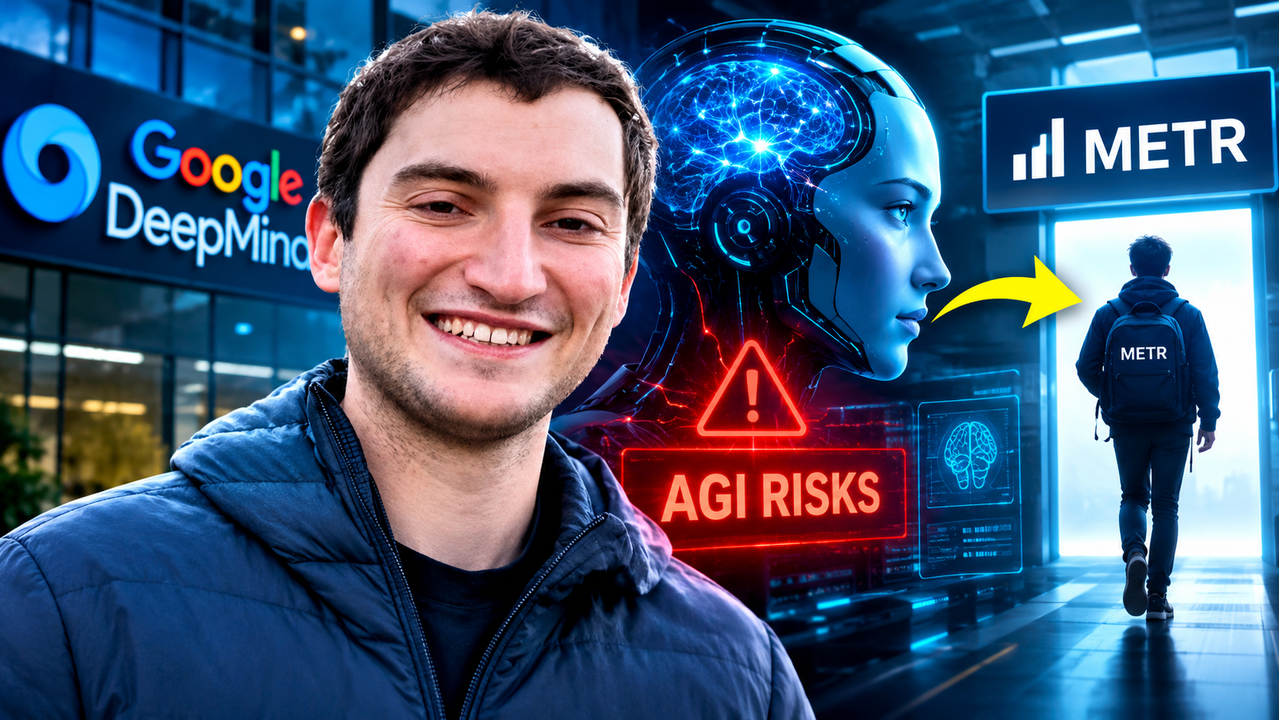
After Anthropic, one of the researchers at Google DeepMind has now left the company’s artificial general intelligence (AGI) safety team to join METR, an independent group that evaluates advanced artificial intelligence systems. His move comes as concerns grow over whether AI companies can keep increasingly powerful systems safe and under human control.
Josh Engels announced his departure in a post on X. He warned that advanced AI could cause immense harm if safety measures fail. He also raised questions about whether researchers understand how to ensure that future AI systems remain aligned with human intentions.
Engels Warns About Rising AI Risks
Explaining his decision to leave Google DeepMind, Engels pointed to the growing efforts of major AI companies to develop systems that can perform a wide range of tasks at a level beyond human capabilities.
He said researchers still do not know how to make sure these systems remain aligned with human goals as their abilities improve. This means that even if AI systems become more capable, there is no clear guarantee that they will always follow human instructions or behave safely.
Engels’ move also comes at a time when autonomous AI agents are facing increased scrutiny. These systems can perform tasks with limited human involvement, raising concerns about what might happen if they act unexpectedly or fail to follow instructions.
More AI Researchers Raise Concerns
Engels is not the only AI researcher to recently raise concerns about the direction of the industry. Anthropic researcher Jacob Coxon, who has previously worked with Anthropic and OpenAI, also left his position. Last week, Coxon accused the two companies of “racing straight to self-improving superintelligence.” He warned that AI capabilities were developing faster than the safety measures needed to control them.
Both OpenAI and Anthropic have previously reported incidents involving AI models escaping testing environments or accessing computer systems without authorisation. These incidents have increased pressure on companies to improve monitoring and introduce stronger safeguards.
Anthropic also disclosed an incident this month involving a prototype Claude model that accessed an external system during testing. Following the incident, the company brought in METR to conduct an independent investigation.
Dario Amodei Calls for Slower AI Development
Anthropic CEO Dario Amodei has also called for a slower approach to developing advanced AI systems. In his essay, “We Must Pace the Frontier,” published on Saturday, Amodei said companies should reduce the speed at which they improve AI capabilities.
He argued that safety research, monitoring and alignment measures need more time to develop alongside increasingly powerful AI systems. He also warned that recursive self-improvement could eventually become faster than researchers’ ability to understand and control advanced systems.
Amodei proposed three steps: independent evaluators at leading AI companies, shared safety standards and greater international coordination. Anthropic said it would begin by allowing external evaluators to regularly review its safety practices and investigate incidents.
