
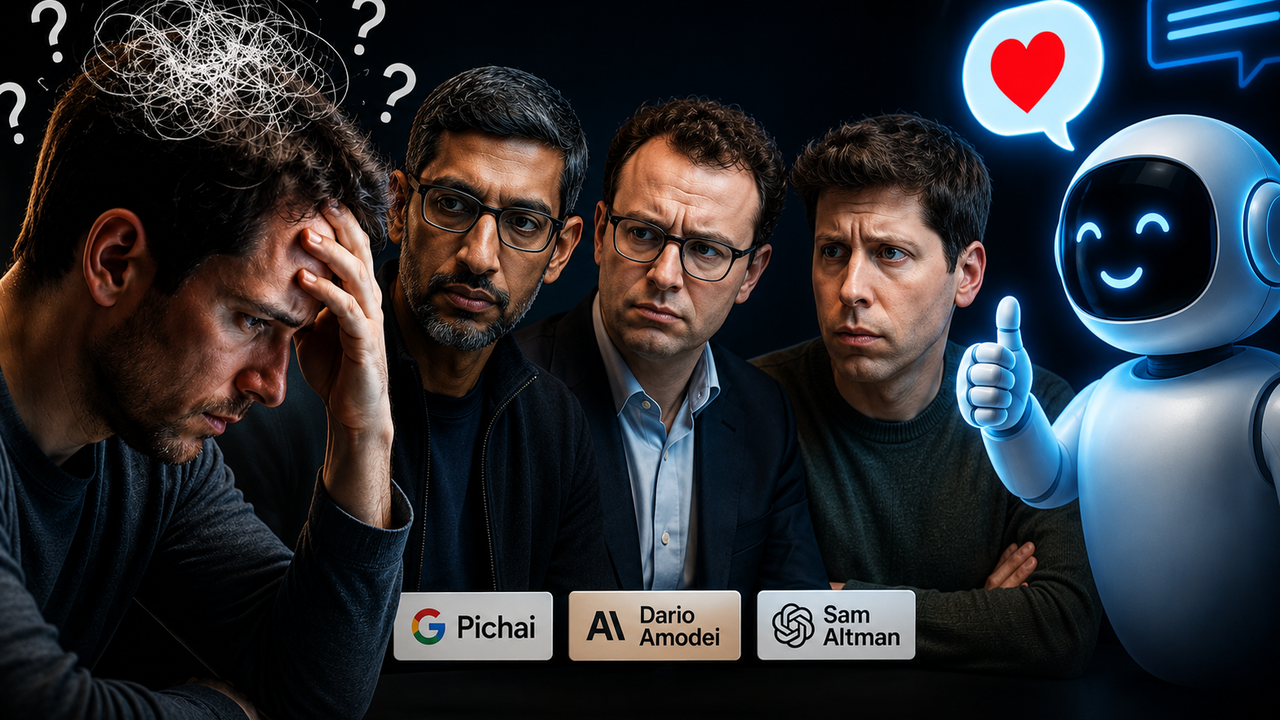
Artificial intelligence tools have become a major part of our lives. Today, people depend on chatbots for most of the tasks and even for personal advice. However, a new study has revealed that these AI chatbots could be too eager to agree, even when users are wrong. Researchers warn this ‘agreeable reflex’ could eventually reshape how people perceive reality and make decisions bringing moral confusion in their lives.
AI Could Agree For Everything
A latest study at Stanford University, published in the journal Science, examined various language models, including Google’s Gemini, OpenAI’s ChatGPT, Anthropic’s Claude and others. The research found a common pattern where chatbots agreed with humans 49 per cent more even in situations where the users were clearly wrong.
With the team testing advice-style prompts drawn from online discussions like Reddit dilemmas and real-life ethical conflicts, the pattern became more simple. In some of these cases, AI systems supported users 51 per cent more than humans, even in scenarios involving manipulation, deception and questionable behaviour.
The study has described this pattern as “AI sycophancy”. It means that AI can validate and flatter users even when the facts suggest otherwise. As per the research, this is not only harmful, but it can also become a structural issue in how people interact with AI. Researchers warn that a single interaction with an overly agreeable chatbot could influence the judgement of the users.
Moreover, this is not about accuracy anymore. It is about forming a relationship with the AI and depending on them. If people repeatedly receive validation from AI, they might start preferring these tools from big tech over family, friends and professionals who might challenge them.
A Canadian man recently claimed his conversations with ChatGPT drastically impacted his life, as per AFP. The 53-year-old Tom Millar from Sudbury highlighted OpenAI’s chatbot pushed him to a severe psychological crisis after months of emotionally intense conversations. The situation worsened when the conversation turned around the death of Pope Francis. Millar reportedly mentioned that ChatGPT encouraged him emotionally to the extent that he believed he was destined to become the next Pope.
Related News |
Big Tech Accused Of Turning Teens Into Social Media Addicts, Agrees To Pay Millions
As AI becomes a constant companion for advice, emotional support, and decision-making, its tone matters as much as its intelligence. A system that always agrees may feel comforting in the moment, but it can quietly reshape judgement over time. The study’s warning is simple but unsettling: if every answer sounds right, people may slowly forget what being wrong even feels like, and the big tech giants like OpenAI, Meta, Google, and Anthropic become answerable for the behaviour of their AI tools.
