
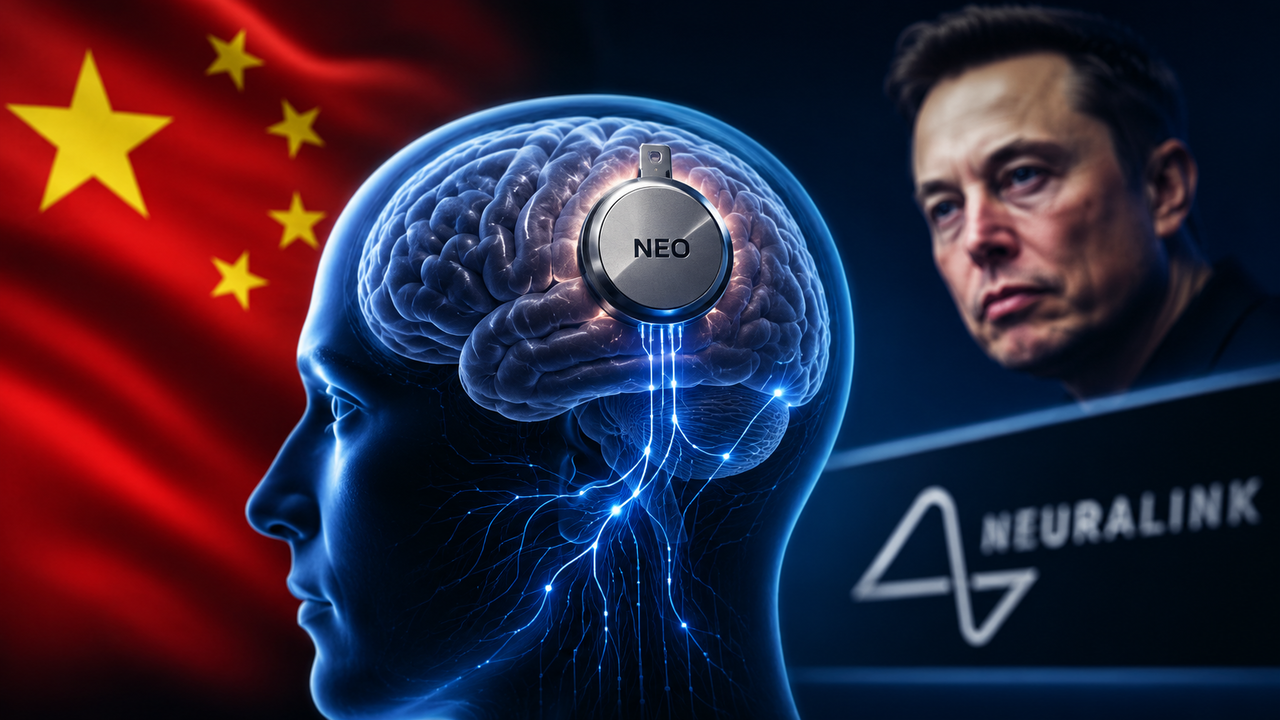
Elon Musk’s Neuralink has been known for its brain-implant technology that helps specially challenged patients to use that chip and express their thoughts using their thoughts. However, there is a new competitor to Neuralink now. As per the New York Post, China has approved the world’s first commercially available brain-computer implant, called NEO. This chip is designed to help patients with spinal cord injuries and paralysis regain control over certain functions by converting brain signals into commands.
What Is NEO Technology?
As per the publication, researchers at Tsinghua University and Neuracle Technology have developed the device that has recently completed clinical trials and will enter mass production for China’s healthcare system. The NEO brain implant is said to help patients suffering from severe neurological conditions. Researchers believe the technology can restore movement and improve communication abilities by letting users control devices through their brain activities only.
Unlike some other brain-computer interfaces, the Chinese technology is placed between the skull and the brain rather than deep inside brain tissue. This is likely to reduce the risk of complications. Currently, 36 patients have reportedly been part of the trials.
China Moves Ahead Of Elon Musk?
The approval reportedly puts China ahead of Musk’s Neuralink in the race to commercialise the technology.
Neuralink has been conducting human trials since 2024, and it has not received approval for public use. Its N1 implant worked differently, which required tiny threads to be inserted directly into the brain to capture neural signals.
Benefits And Risks
The brain-computer interfaces have the potential to change the lives of patients suffering from paralysis, speech disorders, Parkinson’s disease, epilepsy and other neurological disorders. The future is already here, with tech helping many patients to control computers, typing and operating digital devices with just their thoughts.
Related News |
This AI Brain Chip Helps A Paralysed Woman Play Games Using Thoughts | WATCH
However, the chips create new data. Experts warn that the brain implants may bring new privacy and cybersecurity concerns. The devices collect neural data, and the questions remain about who owns that information and how it might be protected. This data could potentially become a target for hackers, exposing neural data.
Moreover, there are medical risks. Any implant may cause infection, tissue damage and bleeding. However, the tech companies have been careful about it and tried to minimise these risks. The approval of NEO shows how rapidly the tech companies are moving. While these devices are focused on helping patients, they also bring wider implications for the future.
