
Artificial intelligence is becoming more advanced every day, but a question often arises in our mind: can it think like humans? A new study from Anthropic explores how some AI models may use a special internal system, similar to a “mental workspace,” to organise information and reason before producing a response.
Anthropic Finds Hidden Layer Of AI Reasoning
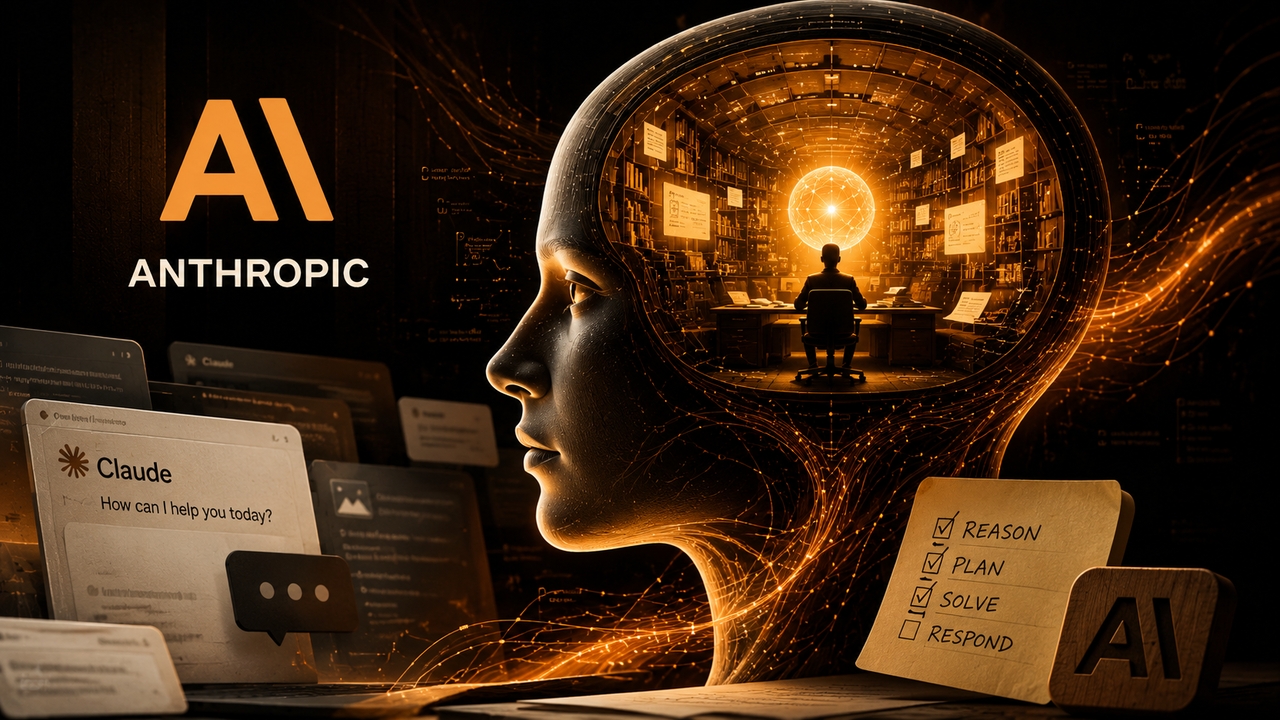
Anthropic published a research paper on Monday, explaining that modern large language models seem to keep a small set of important internal representations separate from the rest of their processing. Researchers described this as a type of “mental workspace” that helps the AI carry out more deliberate reasoning instead of simply predicting the next word.
The company says this workspace is only a small part of the model’s overall activity, while most processing happens automatically without being directly accessible.
Notably, the Dario Amodei-led company compared this idea with a well-known neuroscience theory called the Global Workspace Theory. In humans, the brain constantly processes huge amounts of information, but only a limited portion reaches conscious awareness and can be used for planning, problem solving and speaking.
However, the study does not claim that AI is conscious. Instead, it says that the model seems to have developed a functional system that behaves in a similar way by gathering important information in one place before making decisions.
To study the hidden processes, Anthropic created a new interpretability method called the Jacobian Lens or J-Lens. This tool can identify concepts that the AI is internally prepared to express, even before they appear in its final response. The team believes this gives a clear view of the model’s reasoning process rather than only examining its completed answers.
While the findings are significant, Anthropic makes it clear that the research does not prove AI is conscious or has human-like awareness. Instead, it shows that advanced language models may organise information in ways that resemble certain functions of human thinking.
As AI systems continue to grow more powerful, understanding what happens inside them could become just as important as evaluating the answers they produce.
