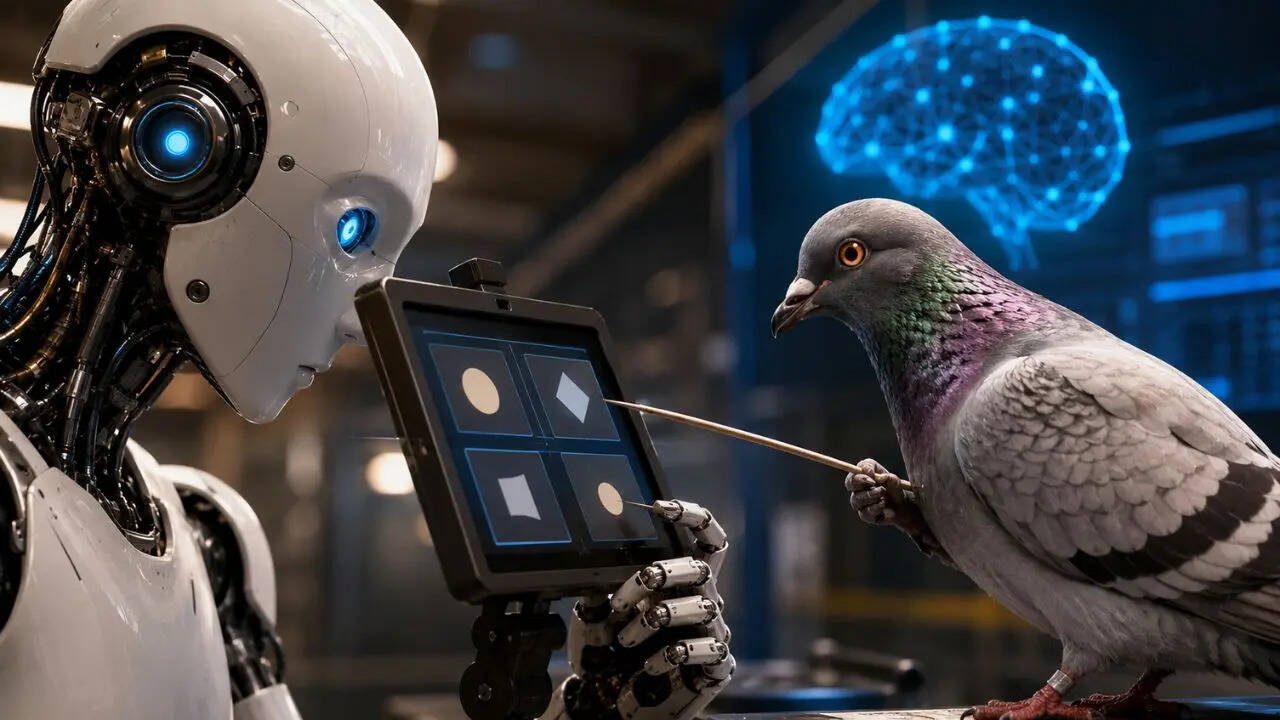
Artificial intelligence is already being used in hospitals to help doctors analyse scans, detect diseases and identify patterns hidden inside large datasets. But one of the latest AI research projects has taken inspiration from a source few people would expect: pigeons. Researchers in the United States are now studying how these birds process visual information, hoping it could eventually help AI systems identify early signs of cancer that even trained specialists sometimes miss. Here’s why pigeons have become an unlikely part of the future of medical AI.
The research is being led by Dr Gregory DiGirolamo from the College of the Holy Cross in Massachusetts. According to a report by Popular Science, the project focuses on understanding how radiologists interpret medical images and whether artificial intelligence can learn from subtle visual signals that occur before a doctor consciously identifies a problem.
Researchers observed that radiologists sometimes looked directly at suspicious lung nodules and even showed physical signs of recognition, such as pupil dilation, yet still classified the scans as normal. Those observations led scientists to wonder whether the human brain detects abnormalities before conscious decision-making catches up.
To explore that question, the team turned to pigeons. Six birds were trained to watch CT scan videos and identify whether lung nodules were present. Using food rewards, researchers taught the pigeons to distinguish between scans containing abnormalities and those that appeared normal.
What surprised the team was that the birds eventually recognised other lung conditions, including emphysema and ground-glass nodules, despite never being specifically trained to identify them.
According to Popular Science, DiGirolamo explained that emphysema and ground-glass nodules “look totally different from a lung nodule.” Yet the pigeons appeared to detect a visual pattern connecting them.
Researchers now hope these findings could help develop AI tools capable of identifying hidden warning signs during medical image analysis. The proposed system would combine eye-tracking data and physiological responses from radiologists with artificial intelligence models designed to flag abnormalities that may otherwise go unnoticed.
Importantly, the goal is not to replace doctors. Instead, the technology is intended to act as an additional layer of support.
DiGirolamo also suggested similar methods could one day be applied beyond healthcare. As he told Popular Science: “Right now, I’m constraining myself purely to medical misses because those for me seem far more practical. But I am hoping to do a little bit of ‘can we tell which Caravaggio are real and which ones are fake?’” For now, however, the focus remains firmly on medicine, where a missed diagnosis can make all the difference.