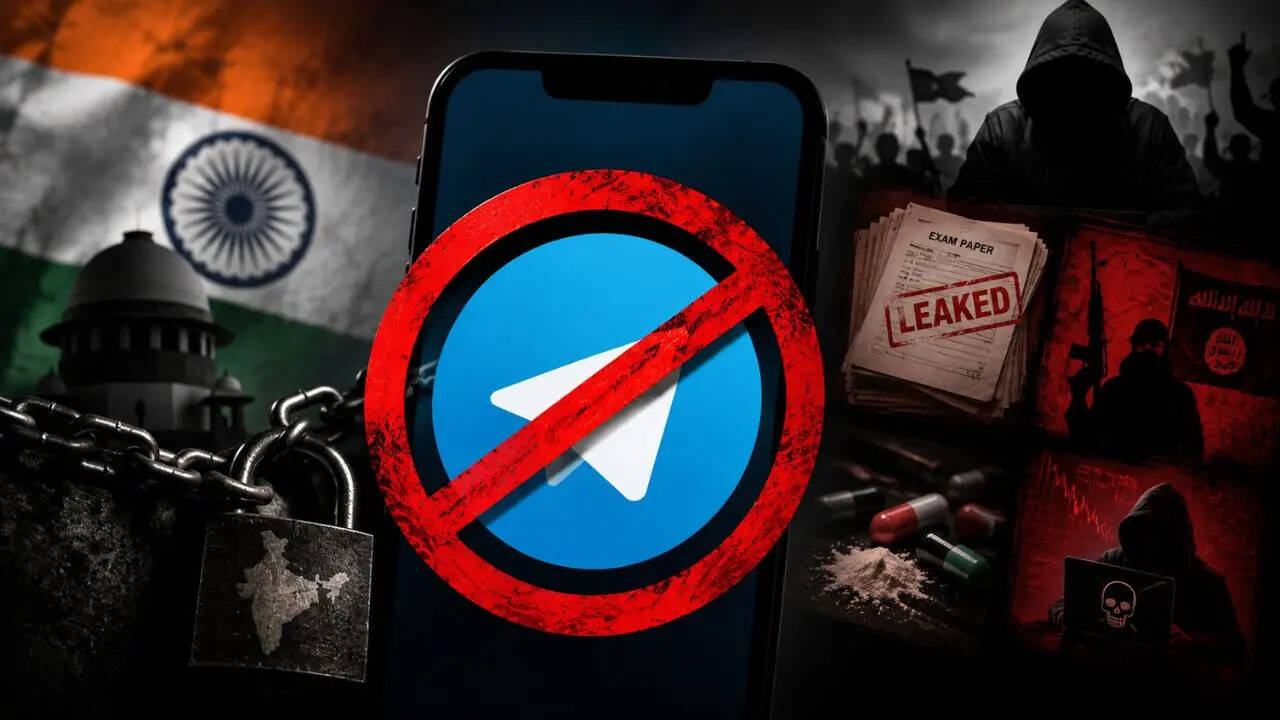
India blocked Telegram for a week on June 16, days before the NEET re-test. MeitY acted on the NTA’s advice under Section 69A, blaming cheating rackets that were using the app to defraud exam candidates. Founder Pavel Durov called it unfair, arguing the ban hits 150 million users while the scams just move to other apps. But Telegram landing in trouble is nothing new. The same light-touch moderation that protects user privacy also makes the app harder to police, and over the years it has been linked to everything from terror propaganda to piracy, scams and leaks:
A Global Timeline Of Restrictions
Quite a few countries have kept a tight leash on the Dubai-based messaging platform for years now. China shut it out entirely back in 2015 as part of its broader internet censorship setup and Iran followed in 2018, alleging the app was being used to organise anti-government protests. Didn’t really work, though, users in both places have kept accessing it anyway, mostly through VPNs. Governments have also tied the app to political unrest more broadly. Thailand restricted it in 2020 during pro-democracy protests, Cuba did the same in 2021 amid anti-government demonstrations, and Pakistan has dipped in and out of restrictions citing cybersecurity worries and misinformation.
Not every country goes for a permanent ban, though. Russia blocked the app between 2018 and 2020 after the company reportedly refused to hand over encryption keys to its security agencies, that one eventually got walked back once enforcement proved too messy. Brazil briefly suspended it in 2022 over court-compliance and misinformation concerns, Spain did something similar in 2023 following a copyright dispute with media companies and Azerbaijan temporarily restricted access during the 2020 Karabakh conflict to control the information flow.
Even where it’s freely available, regulators keep a watchful eye. Norway reportedly won’t let government officials use it on official devices, citing security concerns. Belarus has gone further, labelling several opposition-linked channels as extremist, which puts ordinary users engaging with that content in a legally dicey spot. Germany once explored an outright ban over hate speech and conspiracy content but settled for fines and channel takedowns instead. Bahrain and Indonesia, meanwhile, have seen their own stretches of partial blocking and ISP-level restrictions.
Over the years, Telegram has been linked to terrorist propaganda, cryptocurrency scams, piracy networks, illegal marketplaces, impersonation fraud and political influence campaigns. While the company has repeatedly strengthened moderation policies and removed thousands of channels, critics argue that enforcement often arrives after damage has already been done.
Authorities in India say that is exactly what happened ahead of the NEET re-examination. According to the NTA, organised cheating rackets allegedly used the platform to market fake exam papers and spread misleading information targeting anxious students.
The Biggest Controversies
Telegram’s reputation has also been shaped by a series of high-profile controversies. One of the most serious involves allegations that extremist organisations, including ISIS, allegedly used the platform for recruitment, communication and propaganda. The company later removed numerous extremist channels, but criticism over delayed action persisted.
The WhatsApp-rival has also been repeatedly accused of hosting misinformation campaigns, conspiracy-driven communities and politically motivated influence networks. Researchers have identified Telegram as a major distribution channel for false narratives due to its relatively light moderation compared to mainstream social media platforms.
Financial crime has been another concern. Investigations and academic studies have highlighted the presence of cryptocurrency pump-and-dump groups, investment scams and fraudulent schemes operating through Telegram channels.
In 2024, Pavel Durov, founder of Telegram, was arrested in France and later formally investigated over allegations linked to Telegram’s handling of criminal activity and cooperation with authorities.
The company has also faced criticism over piracy channels, impersonation scams and illegal marketplaces that have periodically surfaced across the service.
The pattern is hard to miss. Year after year, Telegram ends up in the same spot, caught between the privacy it promises users and the misuse that privacy enables. India’s ban is only the latest example. Whether the ban on the app actually stops the fraud or simply pushes it elsewhere is the question now sitting before the governments.