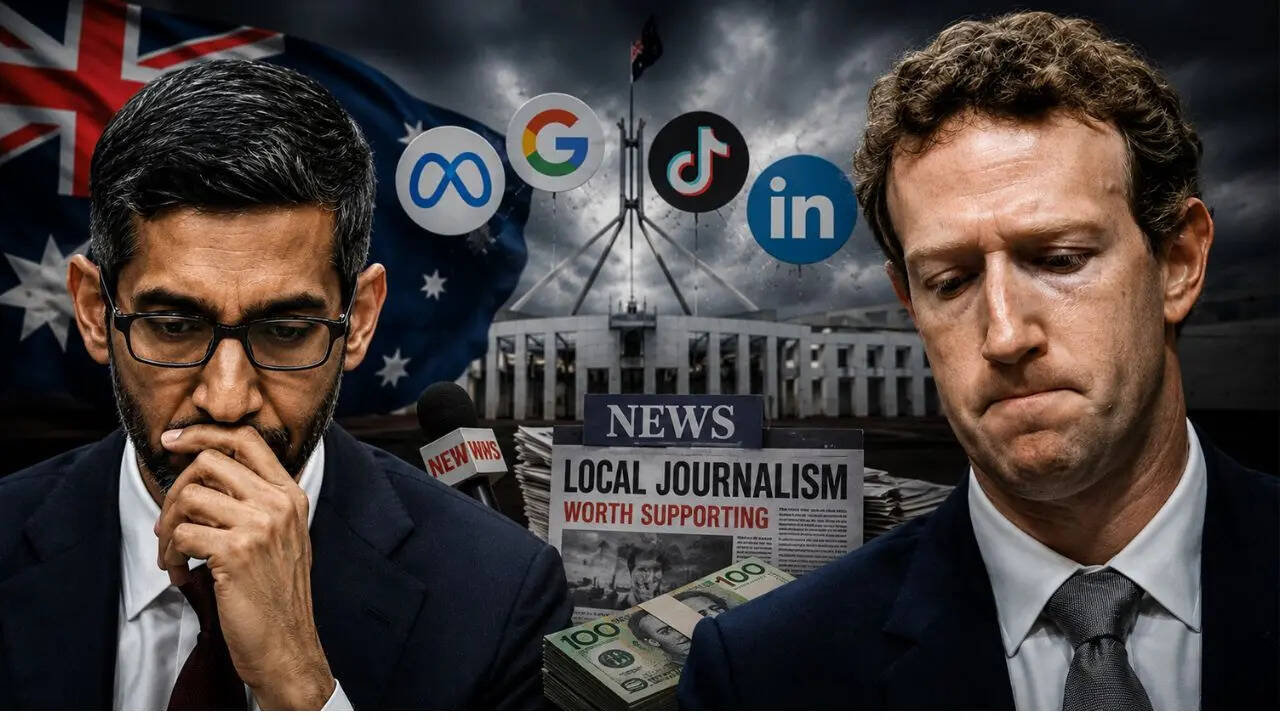
Australia has turned up the pressure on Big Tech once again. The government has raised its proposed levy on major technology platforms, making it even more expensive for companies like Google, Meta and TikTok to avoid paying news publishers for the content that keeps users on their platforms. The latest proposal is designed to strengthen local journalism, while also reopening a debate that many countries, including India, may soon have to confront. Here’s everything you need to know about Australia’s latest move against Big Tech.
Australia Raises The Stakes For Big Tech
Under the proposed News Bargaining Incentive, companies operating significant search engines or social media platforms in Australia with annual local revenue exceeding A$250 million will be covered by the levy. Reuters reports that the government has increased the proposed charge from 2.25 percent to 2.5 percent.
Unlike the earlier proposal, the levy will now be calculated only on a company’s advertising revenue, rather than its total business revenue. As per Reuters, LinkedIn has also been brought within the scope after an exemption for professional networking platforms was removed.
Assistant Treasurer Daniel Mulino explained the government’s reasoning, saying, “The charge-base for the News Bargaining Incentive will be advertising revenue.”
He added, “We’ve upped the charge rate from 2.25 to 2.5% to make sure that the overall amount of money raised by the deals entered into by these platforms with the media is about the same”, Mulino told ABC Radio National.
Could India Consider A Similar Model?
The Australian government says money collected through the levy will be directed towards supporting the country’s news media sector and local journalism, according to Reuters. The proposed legislation is expected to be introduced when Parliament resumes later this month.
Australia’s approach taps into a global discourse over whether digital platforms should share more of the advertising revenue generated alongside news content. With publishers worldwide reporting falling referral traffic and growing concerns over AI-powered search summaries, the issue has become even more pressing.
While India has not proposed a similar framework, Australia’s latest move could also reopen the debate around whether a publisher-support model could work in one of the world’s largest digital markets. As Big Tech’s influence over news distribution continues to grow, the question is no longer just about regulation, but about how journalism itself will be sustainably funded in the years ahead.