
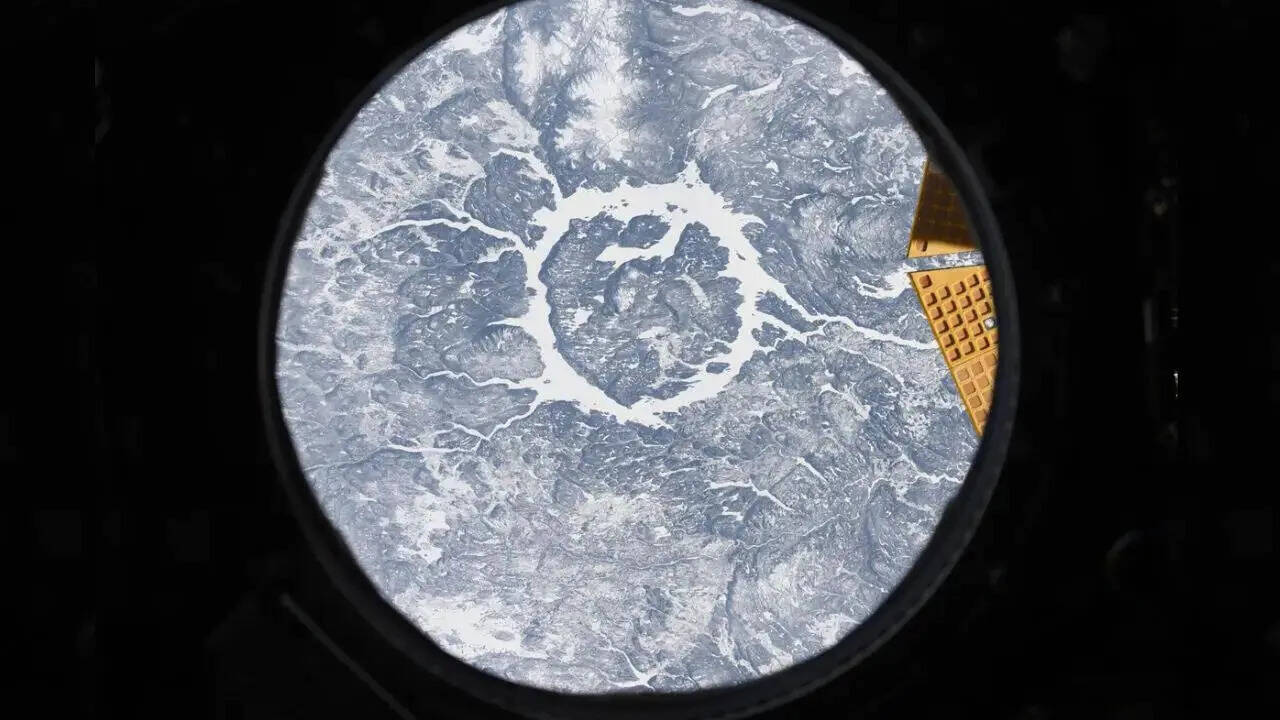
The Orion capsule began its lunar flyby at around 2:45 p.m. ET on Monday, kicking off just over six hours of arcing around the moon with its windows angled toward the far side of the lunar surface. All four crew members on board are now seeing stretches of the moon that no human being has ever laid eyes on before.
The reason comes down to geometry and timing. When the Apollo missions orbited the moon more than 50 years ago, much of the far side was in shadow. The crews were also flying so close to the surface that their field of vision was limited. Artemis II is doing this differently, staying between 4,000 and 6,000 miles from the surface, far enough out to take in the full expanse of the far side while the sun illuminates it completely.
According to a report from New York Post, from inside the Orion capsule, the moon looked roughly the size of a basketball held at arm’s length. As the flyby began, the crew reported it appeared three to four times larger than Earth from where they were sitting.
A Record Already Broken
Before the flyby even reached its most dramatic point, Artemis II had already made history. Around 2 p.m. ET on Monday, the capsule flew past the 248,655-mile mark, the record for the furthest distance from Earth ever traveled by humans, set by Apollo 13 in 1970 and unbroken for 56 years.
By the time the flyby wraps up, the crew will have reached approximately 252,757 miles from Earth.
Going Dark
Halfway through the flyby, around 6:44 p.m. ET, the moon itself will cut off all communications between the capsule and Earth as it passes between the two. It is one of the more striking moments of the mission, four people completely out of contact, on the far side of the moon, seeing things no human has seen before.
Contact is expected to be restored around 7:25 p.m., just after the capsule makes its closest pass to the lunar surface at roughly 4,000 miles altitude.
Science Along the Way
The crew is not just looking out the window. Throughout the flyby, the astronauts are photographing the far side and conducting in-person observations as part of their research objectives. The combination of distance and lighting conditions makes this a unique opportunity to document the lunar far side in a way that simply was not possible during the Apollo era.
Heading Home
The flyby wraps up around 9:20 p.m., and from that point the crew is homeward bound. There is something elegant about how they get back, rather than burning fuel to reverse course, the capsule uses the moon’s own gravitational pull to slingshot itself back toward Earth. No thrusters needed.
The journey home takes four days, with splashdown in the Pacific Ocean expected around 8:07 p.m. ET on Friday.
