
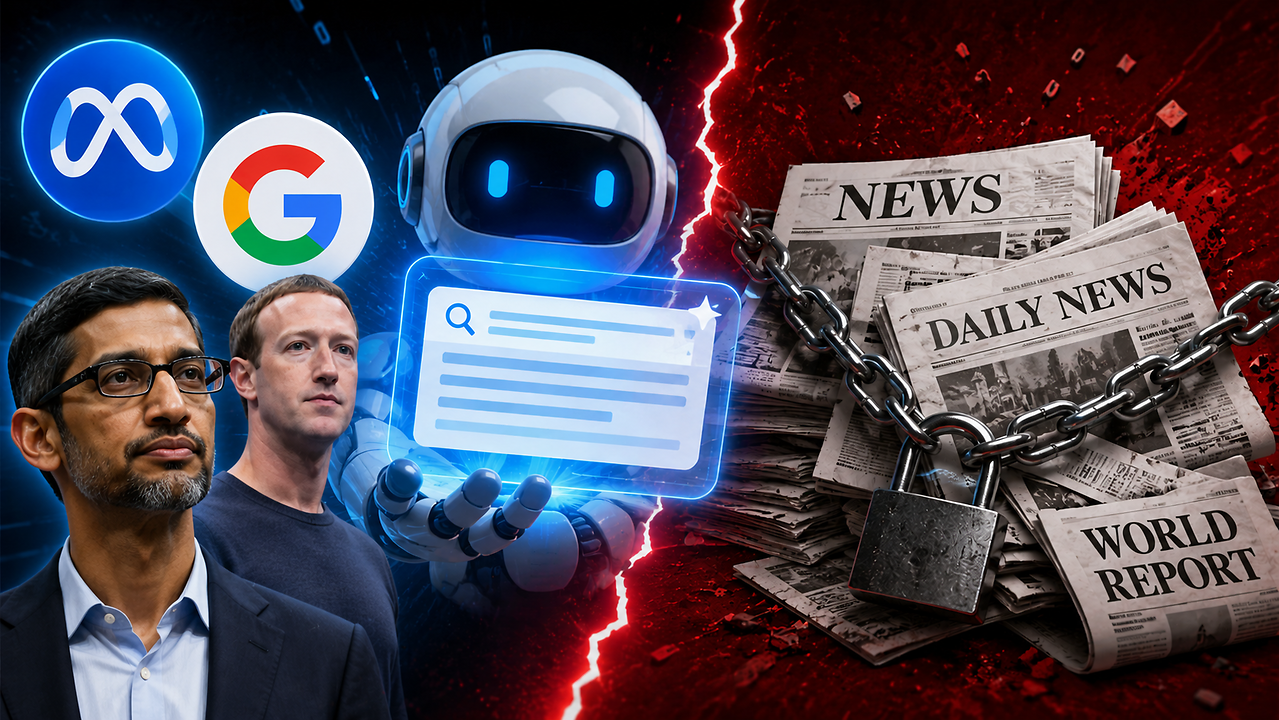
The use of news articles and other copyrighted content to train AI models has become a major concern for publishers. Now, Indonesia is planning changes to its copyright law that could require big tech companies to pay publishers for using their content. However, Meta, Google and TikTok have opposed the proposed changes and said that the new rules will affect how digital platforms operate.
Reuters reported that Meta, Google and TikTok have opposed the proposed changes. Under the new rules, digital platforms may have to pay publishers for showing their news content. The proposal also includes rules on how such companies can use copyrighted content to train their AI models.
At a parliamentary hearing, Google’s Indonesia government affairs and public policy manager, Agung Pamungkas, argued that requiring platforms to pay publishers for displaying news links could restrict people’s access to information.
Mark Zuckerberg’s Meta also raised concerns about the proposal. Its public policy head in Indonesia, Berni Moestafa, argued that publishers could lose readership traffic, advertising revenue and subscription opportunities if platforms were required to pay for showing news content.
TikTok also questioned the proposed AI disclosure requirements.
Indonesia’s proposed AI copyright rules
The proposed changes will have wider implications for the AI industry. An earlier draft of the legislation, reviewed by Reuters, suggested that using copyrighted material to train AI models should require fair-use provisions or licensing agreements.
The draft also proposed restrictions on AI-generated content that imitates a creator’s distinctive style. It included disclosure requirements for AI-generated material and suggested that completely AI-generated work should not receive copyright protection.
If implemented, these rules will give publishers, journalists, writers and other creators greater control over how their work is used by AI companies.
The larger concern is that big tech companies are building commercial AI products using enormous amounts of human-created content. However, the original creators are still looking for clarity on if their work can be used without permission or compensation.
For now, the proposed changes are still under discussion, but the opposition from major tech companies show the growing conflict between AI and copyright protection.
