
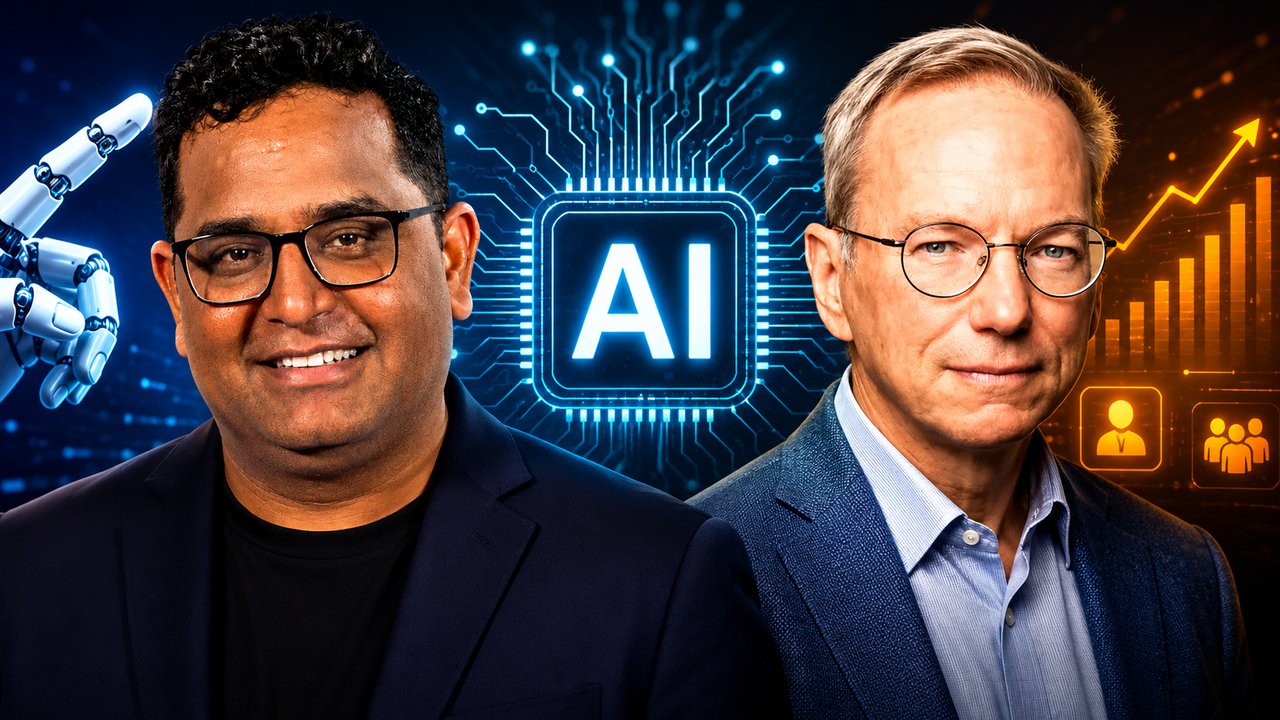
Artificial intelligence has already become the biggest race between global economies, but not every country should follow the similar AI paths. While government and tech giants in the US and China debate how AI should be developed and regulated, Paytm CEO and Founder, Vijay Shekhar Sharma, says India has an opportunity to build its own model. He believes that our country must focus on AI that brings inclusion, productivity and fulfill local needs.
His comments came on X on Monday after he shared an opinion piece by former Google CEO Eric Schmidt and technology analyst Selina Xu written for The New York Times. This article argued that despite AI fears and skepticism around it, the US should use AI as a public project to reap benefits in medicine, science and productivity without triggering job losses, just like China.
Vijay Shekhar Sharma’s AI Vision For India
Referencing the former Google CEO’s piece, Sharma wrote, “India’s AI must bring transformative and inclusive gains. By building QR-led payments, we didn’t let expansive capex or closed systems capture India’s digital revolution. Usage and productivity enhancements fit for India will come from the Made-in-India model. Current open-source models give tons of advantage and starting point for building optimised models.”
Sharma believes that instead of urging India to compete directly with the US or China, the country should build AI suited to its own needs. According to him, open-source AI models already provide India with a strong foundation to create efficient and affordable AI.
Eric Schmidt Warns AI Growth Needs Balance
Schmidt and Xu’s opinion piece described AI as one of humanity’s biggest challenges, warning that moving too slowly may slow economic growth and scientific progress, while moving too quickly could lead to job losses and social disruption. The authors asserted that finding the right balance between rapid AI-development and public safeguards will determine how societies benefit from the technology.
According to both Schmidt and Xu, Chinese technology executives are becoming more cautious about replacing workers with AI too quickly. They believe that business leaders fear that rapid automation may trigger social unrest. They talked about China’s recent policies on legal protections for workers against AI-driven job replacement, employment plans to reduce unemployment risks and new rules restricting AI companions for minors. The AI experts wrote, “If AI is viewed as benefiting the few at the expense of the majority, then the public will rage against the machine.”
As countries race to build more powerful AI systems, Sharma’s response offers a different perspective for India. Rather than trying to mirror the strategies of the US or China, he believes India’s strength lies in building AI that is affordable, open, locally relevant and capable of improving everyday life.
