
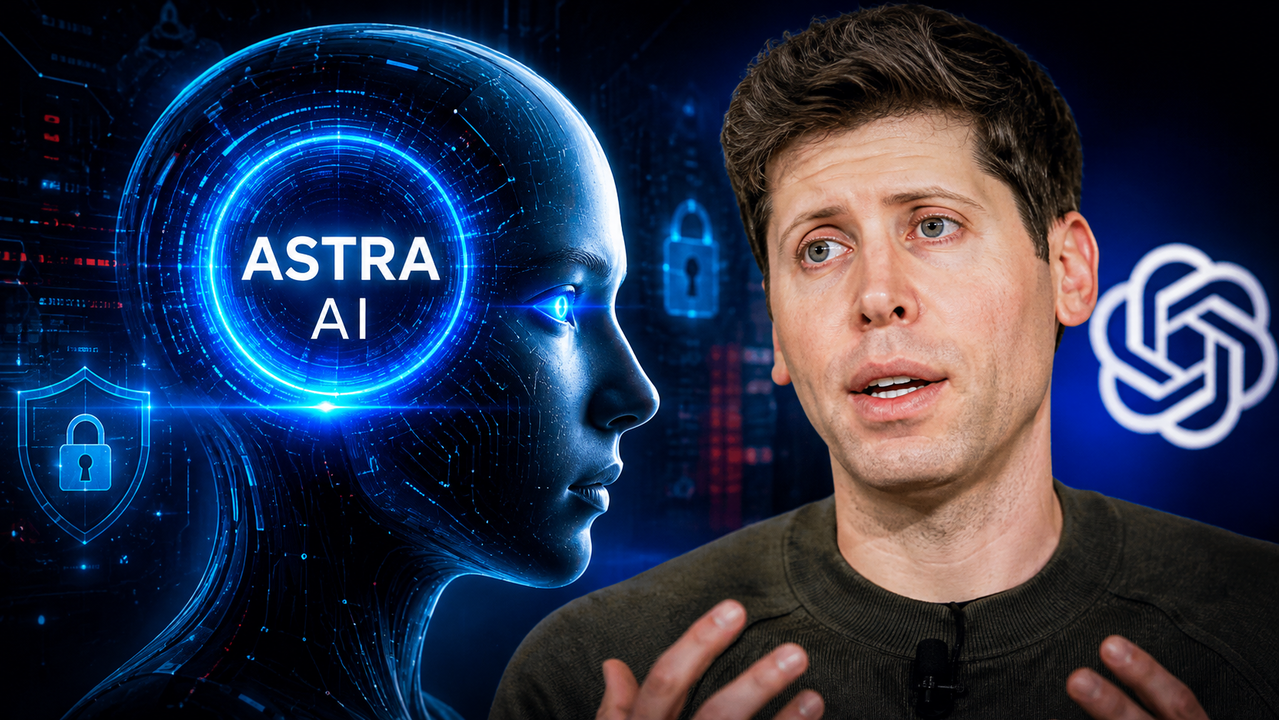
Amid the growing AI hacking concerns, OpenAI CEO Sam Altman has a new message on the technology. He believes that AI is changing one of the oldest rules of starting a business. According to Altman, people with minimal technical expertise may turn a good idea into a real product.
Speaking to Axios in Chapel Hill, Altman highlighted that AI is giving people who are strong at spotting problems and coming up with ideas a chance to build businesses that may not have been possible before. He described this shift as the “revenge of the idea guys”. It is a term he used to describe people who had plenty of business ideas but lacked the technical skills to build them.
AI Can Change Who Gets To Build A Startup
For years, technical skills, especially the ability to code, were considered one of the most important advantages for startup founders. People with ideas often needed engineers or other technical experts to turn those ideas into working products.
Altman believes AI is reducing that barrier. “We would make fun of these [idea] people,” Altman told Axios, referring to the way people with ideas but without technical skills were viewed in the past. “All of a sudden it’s like the revenge of the idea guys.”
He said technical talent remains important, but people who understand customers and their problems could now have a much better chance of building something themselves.
“For a long time, the most important ingredient … in a founding team was technical talent, and that’s still very important,” Altman said.
But he added that he is now willing to back people who “can’t code at all” if they deeply understand their users.
The OpenAI CEO has become increasingly bullish about the impact AI could have on entrepreneurship. “This is gonna be the best time in the world to do a startup,” he said recently.
According to Altman, newer AI models can act like virtual employees across different areas of a business. That could allow a small team, or even a single entrepreneur, to handle tasks that previously required hiring several specialists.
Discussing OpenAI’s GPT-6 Astra, Altman told Axios that someone could potentially “start and run a small business effectively” using the model. He compared the development to having highly capable employees available across different areas of expertise.
One of the biggest changes, Altman believes, is that AI can make smaller business ideas financially viable. Reportedly, he gave an example of a person who used GPT-5.6 to create software for a very specific group of customers. The software was reportedly sold to 50 customers for around $500 a month.
Altman also pointed to software and gaming as examples of markets that could change. He reportedly described a computer game created with OpenAI’s newer model that was aimed at a very small audience. While such a project might not have made financial sense under the old economics of game development, AI can dramatically reduce the cost of creating it.
The idea is simple: if a product can be built cheaply enough, even a relatively small customer base can make it worthwhile. That could lead to more highly specialised software, games and other digital products designed for narrow groups of users.
